
PIECE B · CONCEPT 2 · V02
PLAYCATION TRAVEL · ROLLER COASTER · 9:16 · 2026
He filmed one take. We built the ride around him.
In Fair Light turned a single phone take, shot seated against a plain gray wall, into a vertical short film for Playcation Travel. No park, no shoot, no crew.
§ 02 · THE NUMBERS
02 / 11
1
Source material
Phone take, gray wall
0
Crew on site
People
<10
Client time
Minutes on camera
9:16
Format
Vertical, 720 by 1280
1 in 10
Clean takes
The other nine became coverage
§ 03 · AT A GLANCE
03 / 11
01
CLIENT
Playcation Travel · Jeremie Laviolette
02
SECTOR
Disney travel planning, Canada
03
SERVICE
Concept · script · direction · AI video · edit
04
DELIVERABLE
A 38-second vertical film for TikTok and Instagram, built from one phone take the client shot himself. Designed as a repeatable format, not a one-off.
05
TOOLS
Figma, AI video generation, Adobe Premiere
06
FORMAT
9:16 vertical, 720 by 1280, 38 seconds
07
YEAR
2026
CONTENTS
The film
At a glance
Frames
How it was made
The IP problem
Source to frame
The result
FAQ
§ 04 · FRAMES
04 / 11
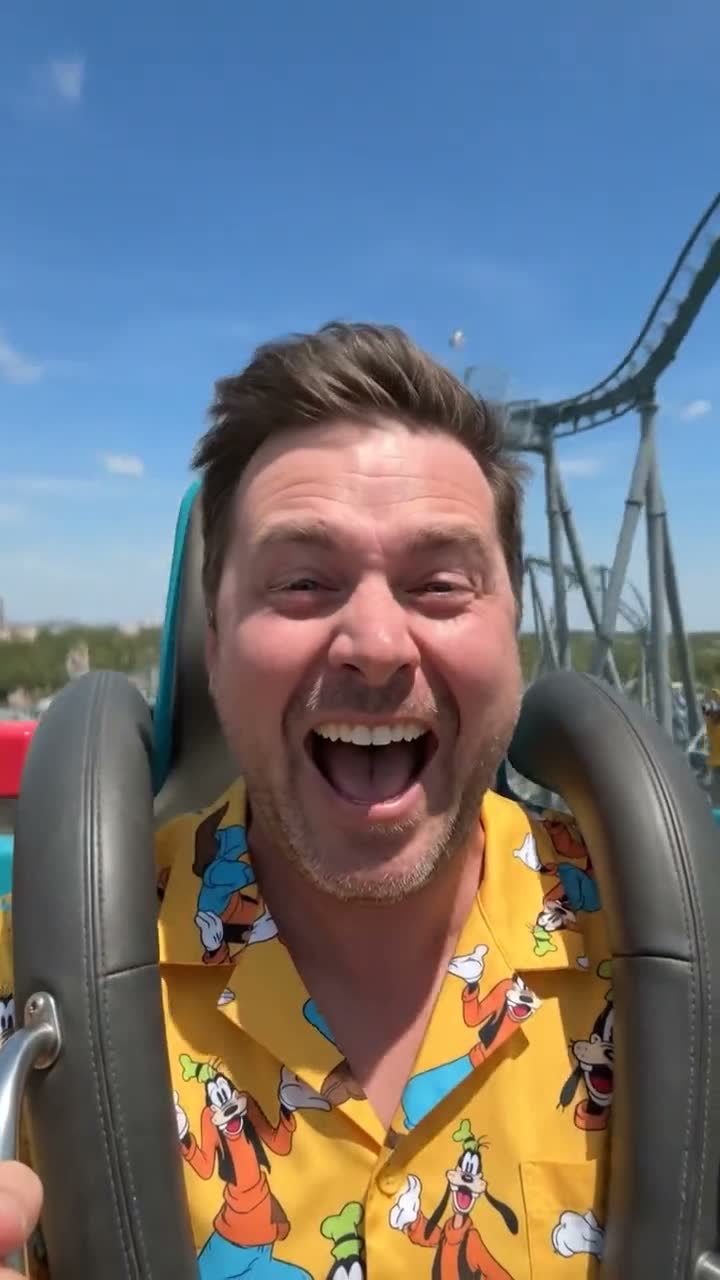
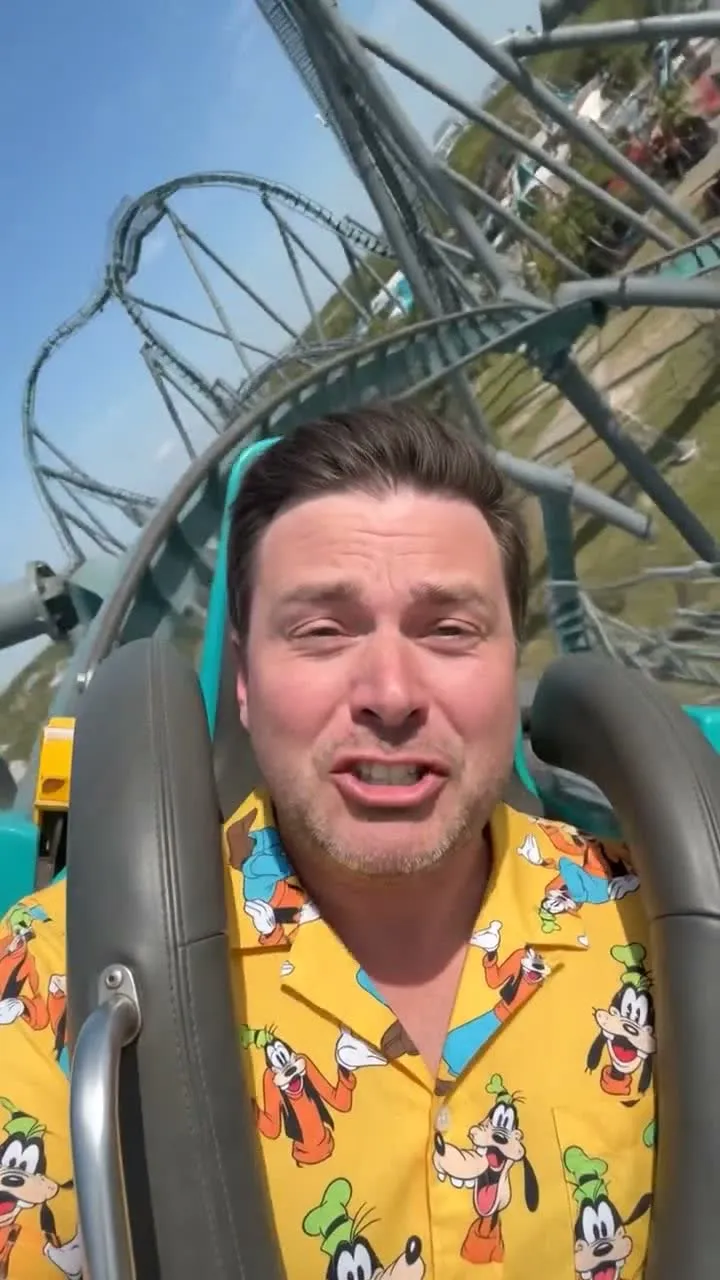
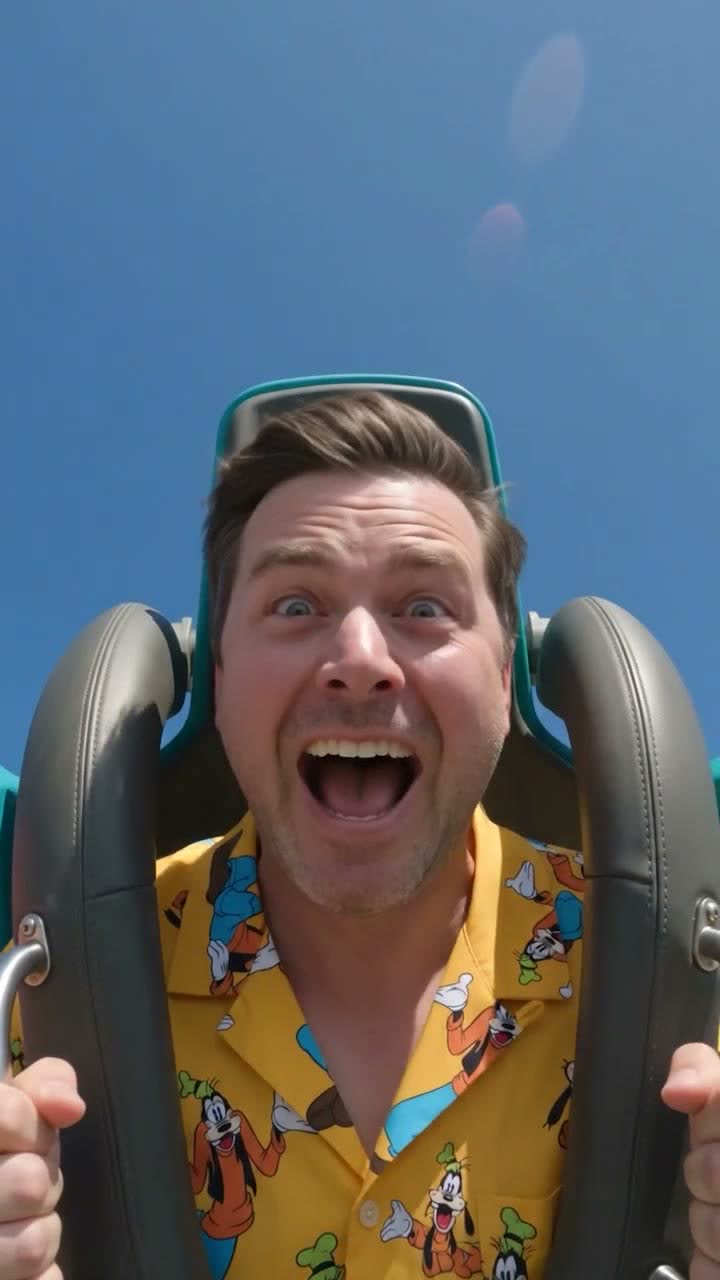
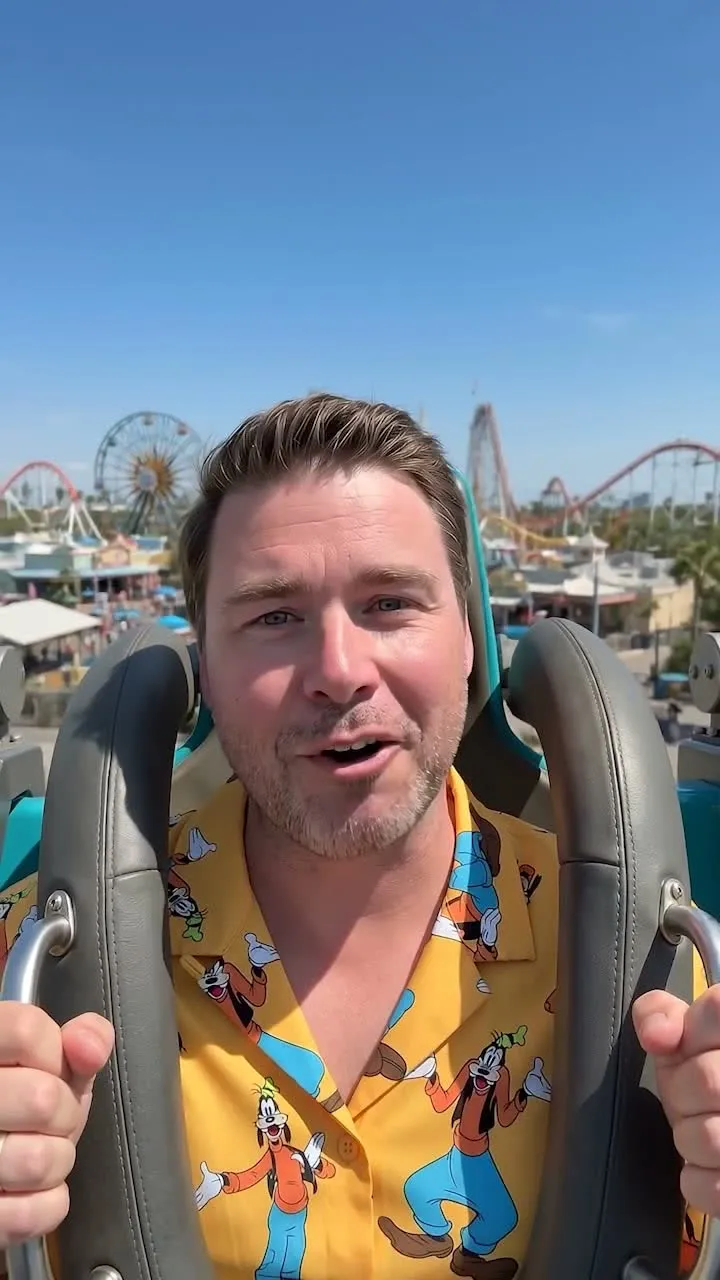
Every frame is vertical, because the film was only ever going to be watched on a phone. He stays centered and the same size in the frame while the world around him changes. The coaster is anonymous by design.
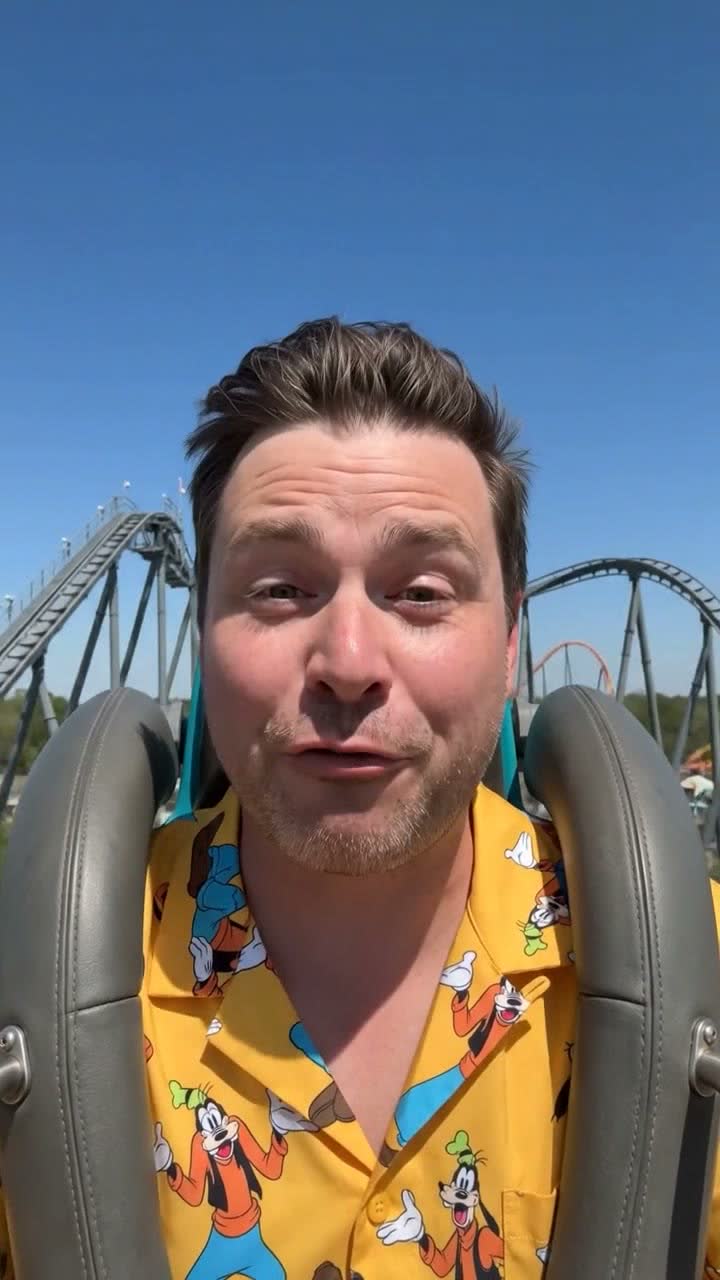
THE FILM CLOSES ON HIS OWN SIGN-OFF.
§ 05 · HOW IT WAS MADE
05 / 11
01
What do you do when the client has no time?
Playcation Travel is a Disney travel agency run by one person alongside a full-time job. The expertise is real and the free hours aren't. A shoot day was never going to happen, and pretending otherwise would have killed the project before it started.
So the ask was made small enough to say yes to. Sit down, prop your phone on a desk, and talk for about forty seconds the way you would tell a friend at a bar. Three real tips, in your own words, with a pause after each one.
He recorded it against a plain gray wall and sent the file. That was his entire contribution to the production.
02
How do you put someone on a roller coaster without a roller coaster?
The film keeps him and replaces everything else. What he emailed was one static take against a wall. What a viewer sees is the same man inside a moving coaster, and the ride is built to react to what he's saying. It climbs the lift hill through each set-up and drops on each payoff.
The ride punctuates the story instead of running behind it, which is why the same look can carry a new set of tips next month without being rebuilt from scratch.
The pauses he left between tips do double duty. They are where the ride changes and they are where the film cuts, which is why the ask included them.
Everything a viewer learns comes out of his mouth unedited, because the expertise is the asset and a machine has no business writing travel advice. And the coaster he's sitting in was a harder decision than it looks. That one gets its own section.
03
What does it actually take to get a clean take?
Roughly one generation in ten came back usable from beginning to end. That sounds like a failure rate until you say it the way a film set would. We shot coverage, and we found the film in the edit.
The model wouldn't hold continuity between shots, so the format was built to jump-cut instead of fighting it. The off-script takes, the ones where he threw his arms up and laughed instead of saying his lines, turned out to be the best material in the piece.
Two fixes did more than any amount of re-rolling. The first was writing the camera down and never changing it: which way it faces, which way the world turns, where the sun sits. Direction had been getting sampled rather than decided, so every take was a different ride.
The second was shorter prompts. One sentence per ride beat outperformed a page of engineering. And every prompt carried his exact words typed out verbatim, which killed a defect that six identical re-rolls couldn't touch.
§ 06 · THE METHOD
06 / 11
INPUT
One phone take, seated and locked off against a plain wall. Under ten minutes of the client's time.
01
DIRECTION
One short instruction per ride beat, plus his exact words typed out verbatim.
02
GENERATION
Video to video. The man is preserved, the world around him is replaced.
03
FINISH
Cut, grade, burn-in type and sound. Jump cuts by design, coverage found in the edit.
04
§ 07 · THE IP PROBLEM
07 / 11
How do you make a video about a brand you are not allowed to show?
Two separate problems pointed at the same answer, and one design decision solved both of them at once.
CONSTRAINT 01 · THE CLIENT'S
What he is allowed to show
He plans travel around one very large brand, and like everyone working in that business he operates inside ordinary trademark and copyright rules about what can appear in his own marketing.
Putting a recognizable branded attraction on screen would have turned a straightforward promotional video into something he had to go and check. That's a normal part of his industry. It's also a real constraint on the work, and it belongs in the brief rather than in a surprise at the end.
CONSTRAINT 02 · THE TOOL
What the model will actually produce
Generative video models refuse copyrighted material outright. Naming a studio or a famous attraction in a prompt doesn't get you a worse result. It gets you no result at all: the generation is blocked before it starts.
So the obvious version of this film wasn't only risky. It was unbuildable. Any brief that depends on showing somebody else's property runs into a wall on the first generation, and no amount of re-rolling moves it.
→ THE SINGLE DECISION THAT CLEARED BOTH
A ride that belongs to nobody
We art-directed a coaster with the right look and feel that could plausibly exist at any park in the world. Steel track, an over-the-shoulder restraint, bright open sky. No signage, no logos, no readable text anywhere in frame, and nothing that points at a specific park's intellectual property.
That one decision cleared both constraints at the same time. The client's marketing stays inside the rules he already works within, and the model will actually build the shot. Neither problem was traded off against the other.
A production decision, not legal advice. The work was directed so the question never had to come up.
This is the part that travels beyond one travel agency. Any brand commissioning AI-generated video is asking two versions of the same question. Will the output get us in legal trouble, and can our category even be produced with these tools? A model can't answer either one, because it has no view on what a client is allowed to show. Art direction is what makes AI video usable inside a brand's legal reality.
§ 08 · SOURCE TO FRAME
08 / 11
Same man, same words, same framing. The only thing that changes is the world behind him. Left is the file he emailed. Right is the frame it became.
Before → after
The finished film
WHAT CHANGED
A phone flat on a desk gives you a locked-off camera, and a locked-off camera is the single biggest reason a background replacement holds together. Nothing drifts, so nothing has to be tracked.
The plain gray wall was better than a green screen would have been. No color spill on skin or hair, no fringing, and it takes burned-in type cleanly.
His face, his voice and his advice are untouched real footage. Only the room is generated.
§ 09 · THE RESULT
09 / 11
He filmed once. Then he filmed again.
Two weeks after the first take, he filmed a new opening to our brief, and the format was ready for the next episode.
LIVE
Published
On the client’s own channel
2nd
Follow-up shoot
Set of takes, filmed to our brief
1
The format
Ride, reused by every episode after
The expensive part was the first one. The ride exists now, the look is locked and the direction is written down, so the next episode is one new take of him talking, dropped into a world that is already built. That is the difference between commissioning a video and owning a format.
§ 10 · FAQ
10 / 11
01
Can you make a film like this from one phone video?
Yes. This one started as a single locked-off take shot on a phone against a plain wall. Everything around him was built afterwards, then cut, graded and typeset like any other production.
02
How much of the client's time does it take?
Under ten minutes on camera for this piece. He sat down, recorded one take and emailed the file. There was no shoot day, no crew and nobody traveled anywhere.
03
Do you write what the client says?
No. On this project the words are entirely his. We wrote a structure, a length and a reason for the pauses, then invited him to say it his own way. The expertise has to be real or the film is worthless.
04
Is the video made with AI?
Part of it. The person, the voice and the advice are real footage. The world around him is generated, and every frame is directed before it moves. If a shot doesn't hold up, it doesn't ship.
05
Can you make AI video for a brand with strict IP rules?
That's usually the deciding question, and it's a direction problem before it's a legal one. On this project the environment was designed so that nothing on screen pointed at anybody's intellectual property. That kept the client inside the rules he already works within, and kept the shot inside what the model would produce. If a brief can't be made that way, we say so early.
§ 11 · NEXT PROJECT
11 / 11
Bring the project.
20 minutes, no deck. Tell us what you're making and who it's for, and you'll leave with a straight answer on whether we're the right fit. Including when the answer is no.