
Founder · In Fair Light
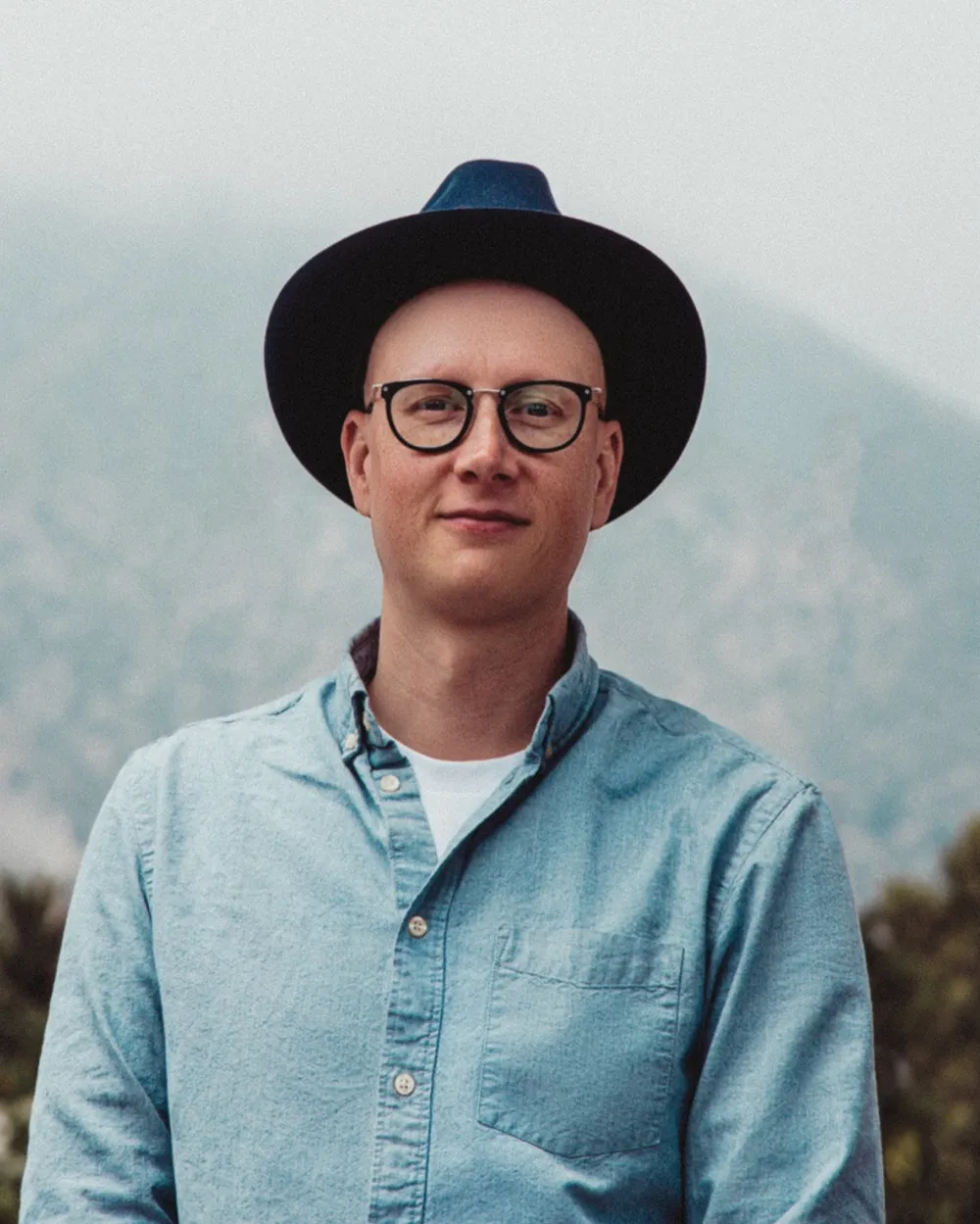
Alexandre Chaput, creative director in Portland, Oregon.
Alexandre Chaput is a creative director based in Portland, Oregon. He has worked across broadcast, live entertainment and brand, and he runs the studio In Fair Light.
The record
Twenty years of making things.
Broadcast, live entertainment and brand work.
Ottawa, Los Angeles, then Portland.
English and French, natively.
Education
Algonquin College · University of Ottawa
2011
Co-founded Casa Productions, Ottawa
From 2016
Creative lead, Mills Entertainment, Los Angeles
Until 2024
Creative Director, Tablz, Portland
Now
Founder, In Fair Light · Portland, Oregon
Languages
English · French
The long answer
Who is Alexandre Chaput?
He's a French-Canadian creative director working in Portland, Oregon. He grew up in Saint-Jean-sur-Richelieu, Québec and then Orléans, Ontario, speaking French at school. He studied Television Broadcasting at Algonquin College and Communications at the University of Ottawa, which is a fair summary of the two halves of the job he ended up doing: the machine and the message.
He works in English and French: scripts, narration and client mail.
What does he do?
He directs. On a given project that means sitting with a brief until the point of it is clear, deciding what the thing should be, and then making it: storyboards in Figma, generation and shooting, then the edit, the grade, the sound, the typography. He cuts in Premiere. He builds motion in After Effects. He designs brand systems in Figma and builds sites in Webflow.
The reason that list is long is that he came up in television, where one person was expected to run the camera, the audio board and the edit. That habit never left. It's also why he's comfortable directing work that mixes generated footage with footage shot on a camera, which is most work now.
Most projects come down to a series of small calls: what to cut, what to keep, what the thing should be.
What he is selling is the deciding.
Where did he work before the studio?
Casa Productions, Ottawa
He co-founded his first studio, making explainer films for university researchers who needed to raise funding.
Mills Entertainment, Los Angeles
Creative lead at a live-entertainment company under CAA. He was effectively the creative department: tour artwork, branding, websites and promotional work, at the pace live touring runs.
Tablz, Portland
Creative Director at a restaurant-technology company, where he owned the brand, rebuilt the website, made the pitch decks and sat with the product design team.
In Fair Light
After Tablz, he took a deliberate pause and worked out what he wanted to build. In Fair Light is what came out of it.
What does he think about AI in creative work?
Two things.
The first is that the tools aren't the point. Some projects want a camera, a crew and weeks. Some want a prompt and an afternoon. Most want both inside one deliverable.
The second is about what changed economically. For most of his career, the expensive part of production was waiting: the crew day that ran long, the render that finished overnight, the week between an approval and the next round. Clients paid for every hour of that. Those hours are largely gone. The hundred small calls about which frame holds, where the cut lands and why the light is wrong didn't go anywhere.
AI didn't make creative work cheap. It made the waiting cheap, which means smaller organizations can now afford direction they couldn't before. That's a good thing, and it's also why so much of what ships now is slop. The waiting was accidentally doing some quality control.
The waiting got cheap. The small calls didn't.
What has he made that you can look at?
A short film for AccèsPharma Martin Payer, a community pharmacy in Hull, Québec, built from two cell-phone photographs the owner sent by email. No crew, no shoot. Eight scenes, French narration. It follows a delivery driver named Michel through four seasons, delivering medication to the same door, in the same uniform, with the same line each time. The repetition is the joke, and the joke is the message: this service is so reliable it borders on boring.
The constraint that shaped it is worth knowing. Québec pharmacies can't advertise prices or promotions. The service was the only thing legally available to sell, so the story had to do all of the work. The owner then asked the agency running his social channels to bring In Fair Light in, and that became a commissioned series of short videos.
An explainer film for Spectr ERP, an operating system for architectural façade fabricators, condensing a complicated software ecosystem into something an engineer would sit through.
Earlier work in broadcast, live entertainment and brand sits at chaput.design. It predates the studio.
Does he work in French?
Yes, natively. He's from Québec and works in both languages. The pharmacy film is in French. The studio also runs a French-language page for Montréal businesses.
Who else is involved in the studio?
In Fair Light is Alex, plus Martin Sinotte, a longtime collaborator and music producer who works with the studio on a retainer and runs its Montréal side, plus specialists brought in when a project calls for one. It's small on purpose; that's what makes the direction affordable.
Now
What he works on now.
Three lanes of work: video, brand and AI systems, all of it directed by the same person you talk to on the first call.
Video
Brand films
Short films that carry a story, made for teams who could never previously justify a shoot.
Video
Product explainers
Films that make complicated software make sense before anyone decides whether to care.
Video
Motion identity
The rules for how a brand behaves when it moves, so everything you publish looks related.
Brand
Brand and design systems
Identity and working Figma files, so a marketing team can publish consistently without a designer on every request.
AI systems
Second brain and AI training
An AI second brain for the person who runs the business, or one day inside a company where every team builds one workflow, taught by the person who runs the studio on one.
A note from Alex
I grew up in French Canada, speaking French at school and watching too much television at home. I've been making things for a living for twenty years, and I've been wrong about a lot of it. The tools I started with are gone. The question I started with is the same one: is this any good, and who decided?
That's the whole studio. Someone decided. I'd rather show you rough work early than polished work late, and I'd rather tell you a project should be smaller than sell you a bigger one.
Alex · Founder, In Fair Light
Get in touch
Working on something?
Tell me what you're making, who it's for and roughly when it needs to exist. I'll tell you what I think it should be, including when the answer is that you don't need me. I answer my own mail.